
SHOULDER COMPLAINTS
Where does the problem begin?
Pain or Loss of Strength Aggravated by Movement?
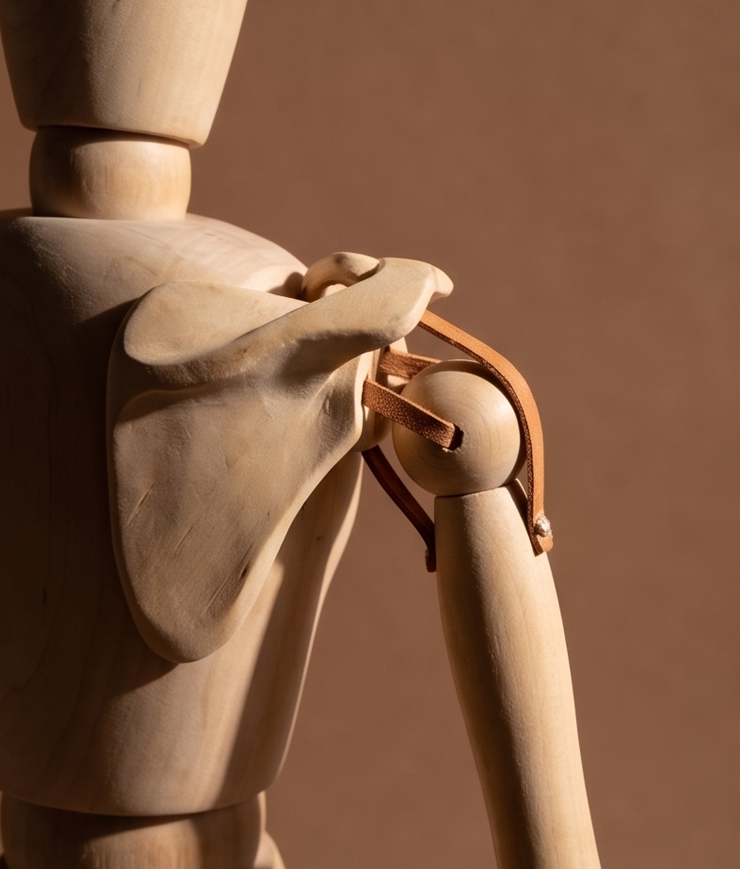
The shoulder is a complex region providing a wide range of motion, where bones, joints, muscles, tendons, ligaments, and a cartilage structure known as the labrum work together.
To determine the source of shoulder pain and loss of movement, factors such as the onset of symptoms, history of trauma, night pain, arm strength, and the impact on daily activities must be evaluated together.
Pain · Night Pain · Loss of Strength · Limited Range of Motion · Sensation of Dislocation · Sports Injury
SHOULDER DISORDERS
Common Illnesses and Injuries
Rotator Cuff Tear
Do you feel a loss of strength in your shoulder when lifting your arm?
-
Tears may develop over time or as a result of trauma in the tendons that move and stabilize the shoulder joint. Symptoms may include pain, disrupted sleep, and a loss of strength when lifting the arm.
Recurrent Shoulder Dislocation
Why does a shoulder that has dislocated once dislocate again?
-
During the initial dislocation, the labrum and ligaments that stabilize the shoulder joint can be damaged. This can result in a sense of instability in the shoulder and recurrent dislocations.
Shoulder Osteoarthritis
Is your shoulder mobility gradually decreasing and your pain increasing?
-
Damage to the cartilage on the joint surface over time or following injuries can lead to pain, stiffness, and loss of movement.
TRAUMA AND OTHER SHOULDER PROBLEMS
From Limited Mobility to Complex Reconstruction.
Shoulder problems can develop as a result of trauma, sports injuries, repetitive movements, or the gradual damage of the tissues that make up the joint. Problems involving the bone, tendons, ligaments, labrum, and joint capsule can lead to pain, loss of strength, and restricted movement.
01
Fractures Around the Shoulder
Fractures may occur in the section of the upper arm bone near the shoulder, the collarbone, or the shoulder blade as a result of a fall or a direct blow. Treatment is planned based on the nature of the fracture and its relationship to the joint.
02
Labrum and Ligament Injuries
Trauma, shoulder dislocation, or repetitive sports movements can cause damage to the labrum and ligaments that stabilize the shoulder joint. Symptoms may include pain, audible sounds, and a sense of instability in the shoulder.
03
Acromioclavicular Joint Injuries
A fall onto the shoulder or a direct blow can cause an injury to the joint where the collarbone and shoulder blade meet. Pain and a change in shape may occur in the upper part of the shoulder.
04
Frozen Shoulder
Shoulder movements may progressively diminish as a result of the stiffening and tightening of the joint capsule. Pain and a significant loss of motion may be observed, particularly when lifting the arm or moving it backward.
05
Shoulder Impingement Syndrome
Compression of the tendon and surrounding tissues in the shoulder during arm elevation can cause pain in the front and side of the shoulder, nighttime discomfort, and restricted movement.
06
Biceps Tendon Injuries
Damage to the biceps tendon located at the front of the shoulder can develop as a result of overuse, strain, or trauma. Pain, tenderness, and loss of strength may occur during lifting movements.
Surgery: For the Right Patient, at the Right Time.
Not every problem involving the hand, wrist, elbow, or shoulder requires surgery.
Treatment is planned by collectively evaluating the source of the problem, the patient’s age, occupation, activity level, and expectations, as well as the characteristics of the condition.
In cases where non-surgical methods are insufficient or the injury requires immediate surgery, the appropriate method for the patient and the specific problem is determined.